

U.S. President Donald Trump has now slapped 50 per cent tariffs on $28-billion worth of Canadian exports after trade talks between Ottawa and Washington collapsed on Friday.
Prime Minister Mark Carney told Canadians on the weekend that he directed the country’s negotiators to return home after the American side “asked too much and they offered too little” in a trade deal whose terms were not acceptable for Canada.
Ontario Premier Doug Ford has been at the forefront of the ongoing fight against U.S. tariffs. At a news conference on Monday, Ford said the prime minister had his full support as the Ontario premier called for a strong response to Trump’s actions.
“We’ll see how this goes, but [Trump] wants to put pain on Canadians,” Ford said. “We’ll leverage every bit of pain we possibly can on Americans.”
Canada is preparing to respond with dollar-for-dollar tariffs, which will take effect the day after Labour Day. Officials are expected to provide details on the retaliatory measures on Tuesday.
Amid the escalating trade war, here’s a look at some of the key points of leverage Ontario can bring to bear at this point in the trade war.
Keeping U.S. booze off shelves
Ontario is among the Canadian provinces and territories that have pulled U.S. liquor from shelves in response to the trade war.
Ford took those products off LCBO shelves in March 2025. They have not been made available since.
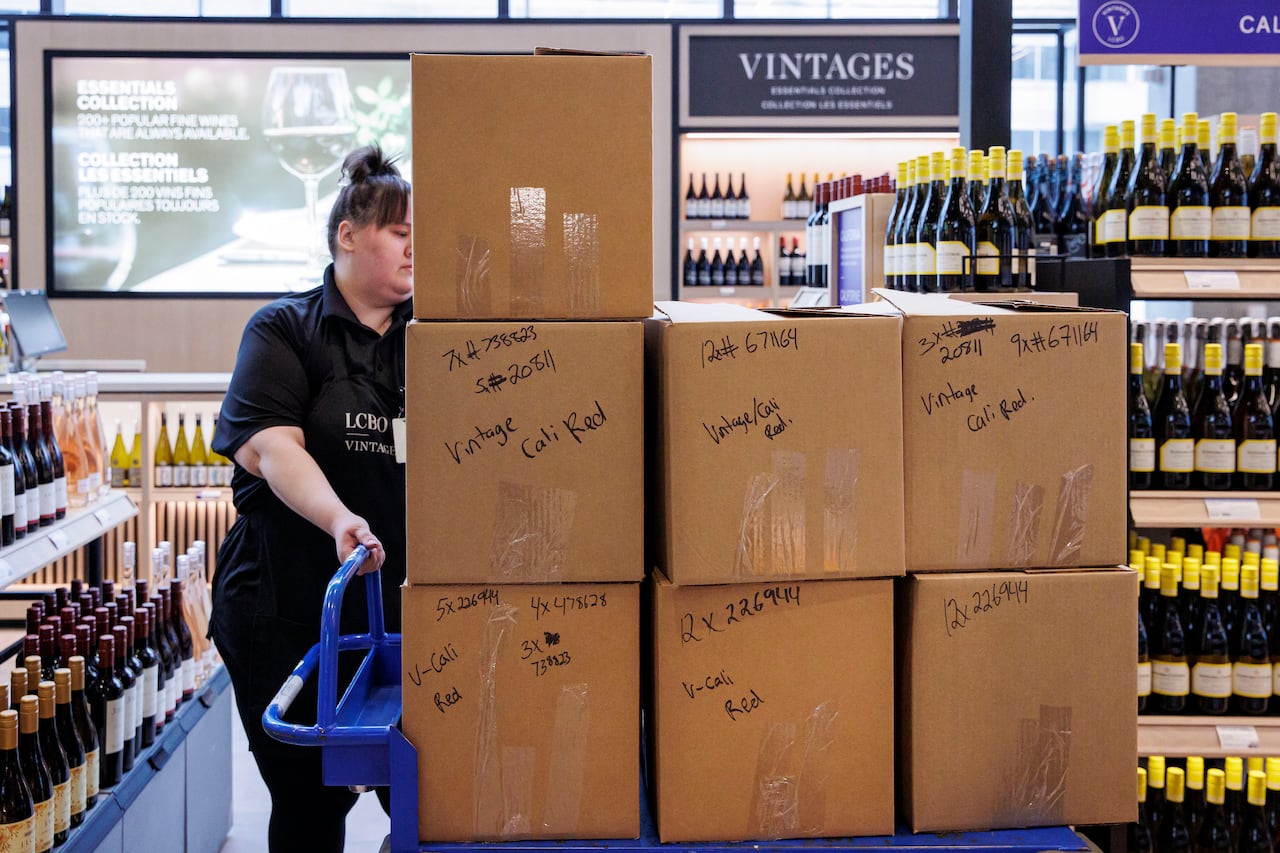
A worker is seen packing up bottles of U.S.-manufactured alcohol as they were being pulled from the shelves of an LCBO store in Toronto on March 4, 2025. (Evan Mitsui/CBC)
That campaign has led to a massive downturn in U.S. exports of alcohol to Canada, and has specifically been cited as a trade irritant by U.S. authorities.
Anna Esselment, an associate professor of political science at the University of Waterloo, says the move to keep U.S. booze off shelves may be the most effective tactic Ontario has in terms of leverage — given that it has already been proven to work.
“We know for a fact that its effect has been devastating and was a key card for Canadian negotiations to play,” she told CBC News via email.
Threatening to cut off power exports
Ford has previously threatened to halt the export of electricity from Ontario to the United States.
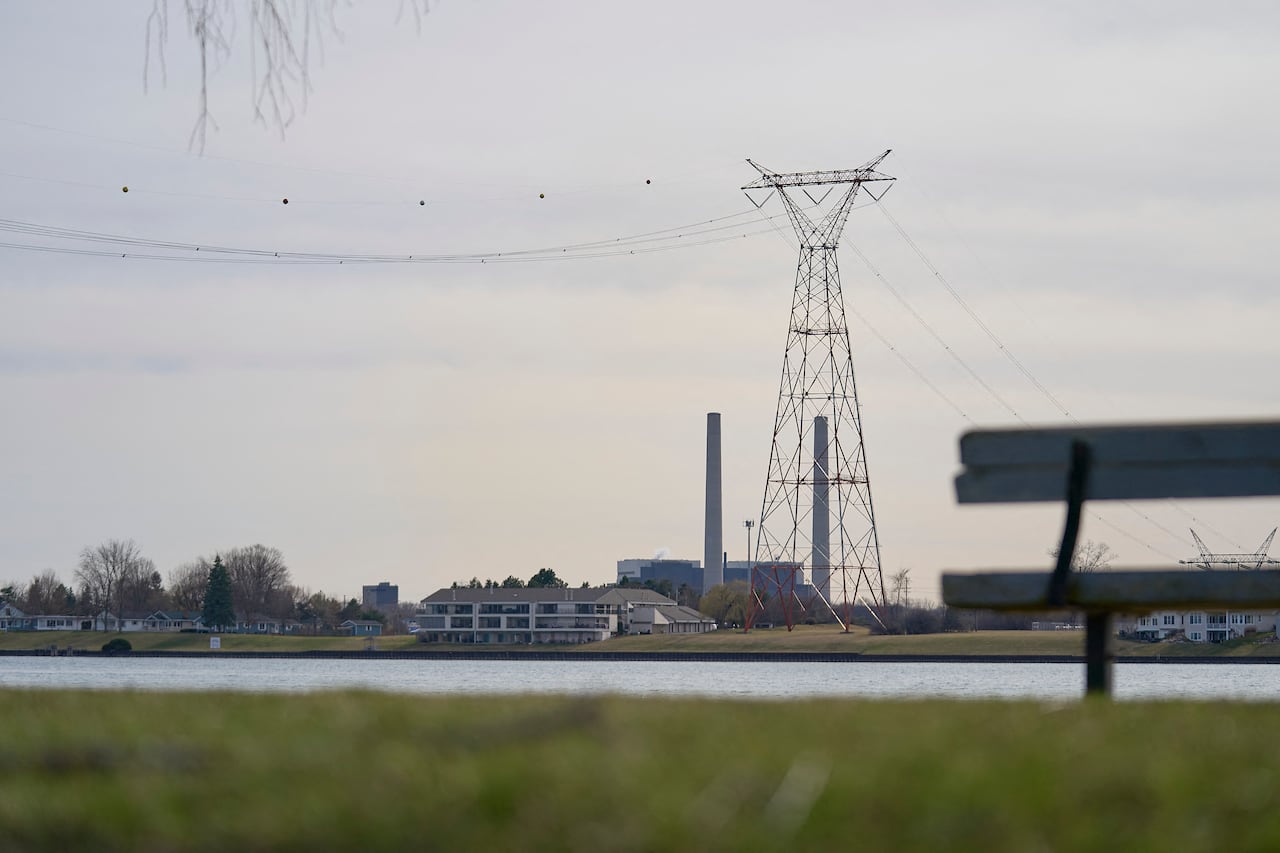
A set of power lines running across the St. Clair River, between Ontario and the state of Michigan, are seen in April 2025. (Geoff Robins/AFP/Getty Images)
The premier raised that spectre again on Monday, while also floating the prospect of adding a surcharge to power exported from Ontario to 1.5 million customers in Michigan, New York and Minnesota.
U.S.-based political scientist Lewis Krashinsky said the threat of pulling the plug on electricity customers is a major point of leverage for Ontario.
It would be hard to predict the U.S. reaction if the Ontario government were to follow through. But Krashinsky says it’s the kind of action that can only be taken once.

On Friday, Canada’s trade talks with the U.S. fell apart less than an hour before the deadline for new tariffs hit. While there had been positive signs earlier in the week, Prime Minister Mark Carney says the U.S. proposed new terms in recent days that were “uneconomic, unfair” and “called into question the reliability of any deal.”
Former Conservative Leader Erin O’Toole is a member of the Prime Minister’s Advisory Committee on Canada–U.S. Economic Relations. He joins host Jayme Poisson to shed more light on what went wrong, and what could be coming next.
For transcripts of Front Burner, please visit: https://www.cbc.ca/radio/frontburner/transcripts [https://www.cbc.ca/radio/frontburner/transcripts]
“Once you sort of play a card, you can’t play it again,” said Krashinsky, who is the William Lyon Mackenzie King Fellow at Harvard University in Cambridge, Mass.
Ford suggested on Monday that other provinces should also think about the electricity-related leverage they could wield.
“We aren’t the only one that sends electricity down to the U.S. New Brunswick does, Quebec does, B.C. does, Manitoba does, just to name a few,” Ford said.
“So we need to get together … and decide if we’re going to put surcharges on the electricity. How can we let them take really inexpensive electricity to make goods to compete and take jobs from Canadians?”
Taking on the bully pulpit
Trump may occupy the so-called bully pulpit in Washington, but Ontario’s premier has proven adept at getting his own message out to Americans.
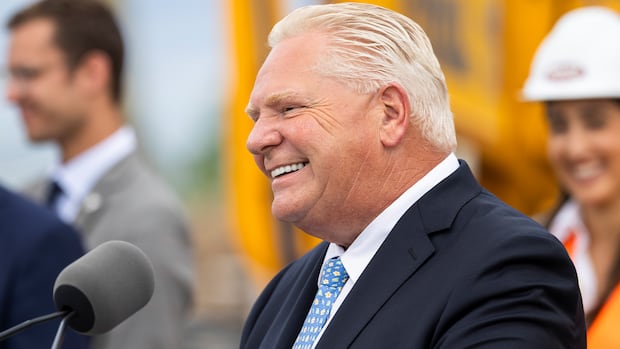
A day after hurling insults at U.S. President Donald Trump, Ontario Premier Doug Ford took a more measured approach while discussing the trade war during appearances on American TV. Meanwhile, Canadian officials rebuffed Trump’s threat to change Lake Ontario’s name to Lake America.
Ford has made frequent appearances in U.S. media throughout the trade war and last year, his government pushed out an anti-tariff ad featuring former U.S. president Ronald Reagan that enraged the White House.
The clip got a lot of attention, but Krashinsky notes it was not “particularly effective in getting the Americans to the negotiating table.”
Ford had more to say on the state of the trade war on Monday, including some choice words for Trump. The president clapped back at the premier and the prime minister, calling for them to “fall in line” with U.S. demands.
“I don’t respond to a dictator like President Trump, a bully like President Trump,” Ford told reporters Monday afternoon.
-
Mark Carney doesn’t stop the United States from driving negotiations over a cliff
-
Trump says Canada ‘wants the benefits’ of being a U.S. state ‘without being one’ as trade dispute deepens
Christopher Cochrane, an associate professor of political science at the University of Toronto, questioned whether the use of “personal insults” would have strategic utility for the Canadian side.
“I can’t imagine a scenario where those turn out to be helpful,” he told CBC News Network on Monday.
Krashinsky likewise isn’t convinced that getting into “a shouting match” with the U.S. president is a benefit. But he noted that it could be helpful for Canada to keep the issue of the tariffs in the spotlight as the U.S. approaches midterm elections in November.
“If Canada can keep the conversation on an unpopular trade war for the Americans … that can be a really effective tactic,” Krashinsky said.
For that reason, Krashinsky said he won’t be surprised if he sees Ford doing more U.S. media in the days ahead.
Tag: rewrite-pending