

On Wednesday, millions of workers across Spain halted operations in businesses and public transport in the eurozone’s fourth largest economy. This action coincided with mass demonstrations in major cities, protesting against skyrocketing rents and property prices.
Housing advocates are optimistic that this significant display of unity will prompt the government to implement stricter regulations to safeguard tenants and mitigate real estate speculation. Meanwhile, Spain’s leftist government is aiming to galvanize voters ahead of the national election scheduled for later this month, with current polls showing unfavorable results for them.
The strike, themed “Salaries. Housing. Prices.” marked Spain’s first general strike in 14 years, primarily driven by housing-related discontent.
The event saw workers and everyday citizens converge in central Barcelona and Madrid, along with demonstrations in other cities. Housing activists claimed that 400,000 participants marched in Barcelona, while the local government reported an attendance of 55,000, showcasing a large banner stating “Live. Not Just Survive.”
In Madrid, government officials estimated that around 120,000 people participated despite heavy rainfall.
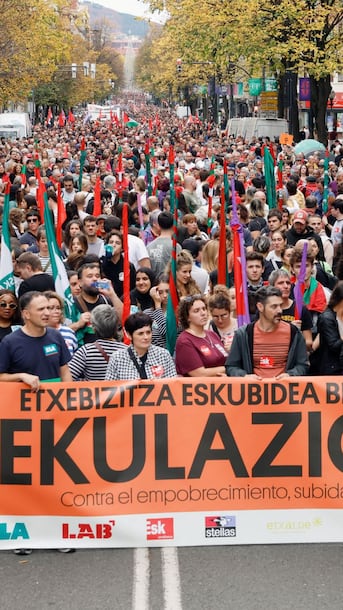
People across Spain have shut down businesses, factories and the country’s rail system as part of a general strike. The action comes as many in the country grapple with rising rents and home ownership costs.
After a peaceful march in Barcelona, some demonstrators began vandalizing shops on Paseo de Gracia, a prominent shopping street. They ignited small fires in front of stores, burned trash bins, and fired fireworks at police who responded in riot gear and armored vehicles.
Throughout the day, public transport in Barcelona, including the metro and buses, ceased operations outside of rush hours, leading to light street traffic. However, many smaller businesses, such as coffee shops, remained open.
Carlos Ferrer, a 45-year-old customer service employee attempting to return to Alicante by train from Barcelona, remarked that sometimes only “radical measures, like a general strike,” can instigate meaningful change.
“Authorities must feel pressure from the public to take action,” he stated.
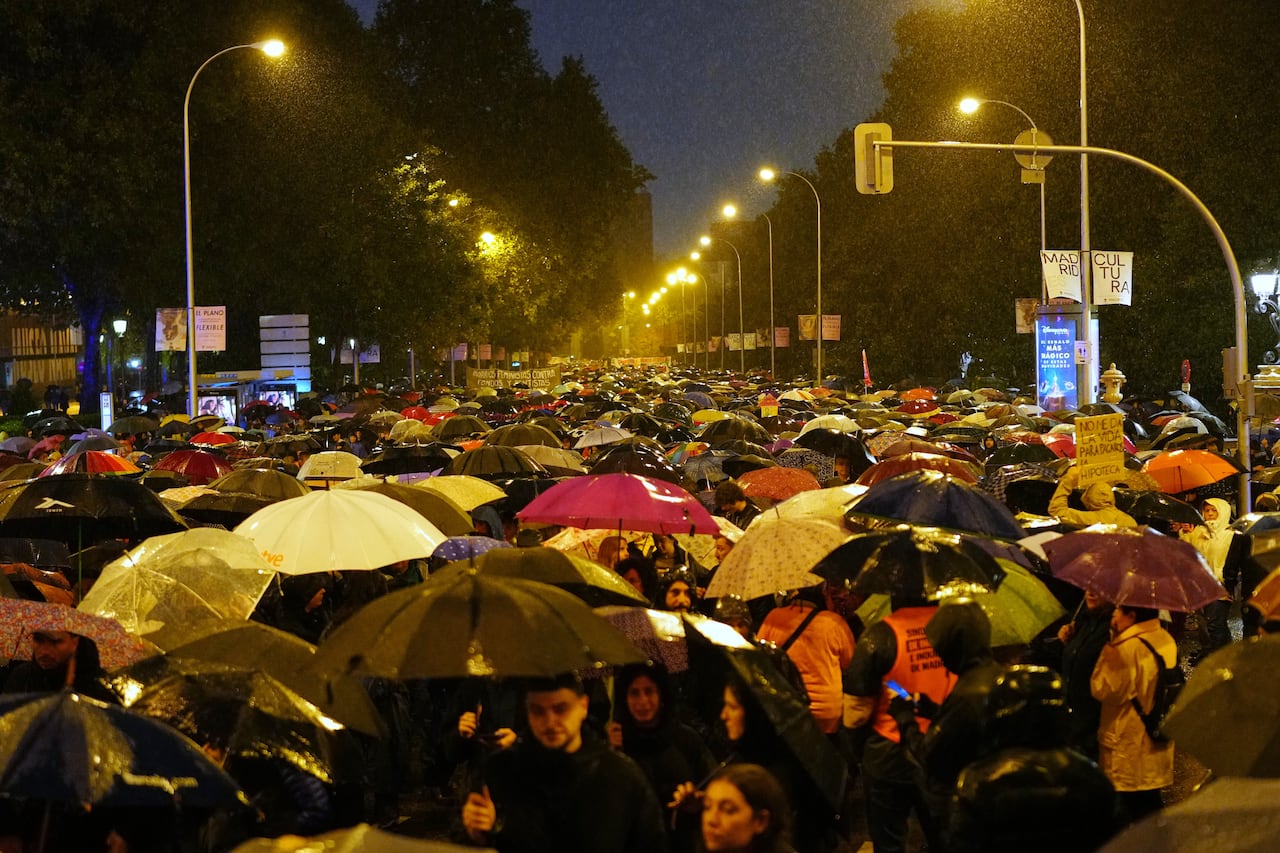
Protestors marched under heavy rain during the nationwide general strike in Madrid. (Francisco Seco/The Associated Press)
Protesters brave rain and pepper spray
As night fell in Madrid, the broad Paseo del Prado transformed into a sea of umbrellas as a substantial crowd gathered in continuous rain.
Almudena Lopez, 74, and her husband participated in Wednesday’s protest in Madrid with their children in mind.
“My son is 43 years old and still unable to buy a home due to financial constraints,” Lopez shared. She noted that her son, who works in IT, is forced to rent a small room in a shared apartment.
“In my youth, having a university degree guaranteed a job if you were willing to save and make sacrifices. Today, it’s a completely different situation.”
Although the strike was organized by Spain’s two main unions, it prominently included leadership from a grassroots housing activist group, primarily composed of younger individuals who have personally experienced housing challenges.
“This strike opposes rent-seekers, real estate speculators, and the large corporations profiting from property sales, as well as various levels of government,” housing activist Valeria Racu explained to reporters in Madrid.
“We are here to demonstrate that we can set our own agenda, and we will continue doing so regardless of who is in power.”
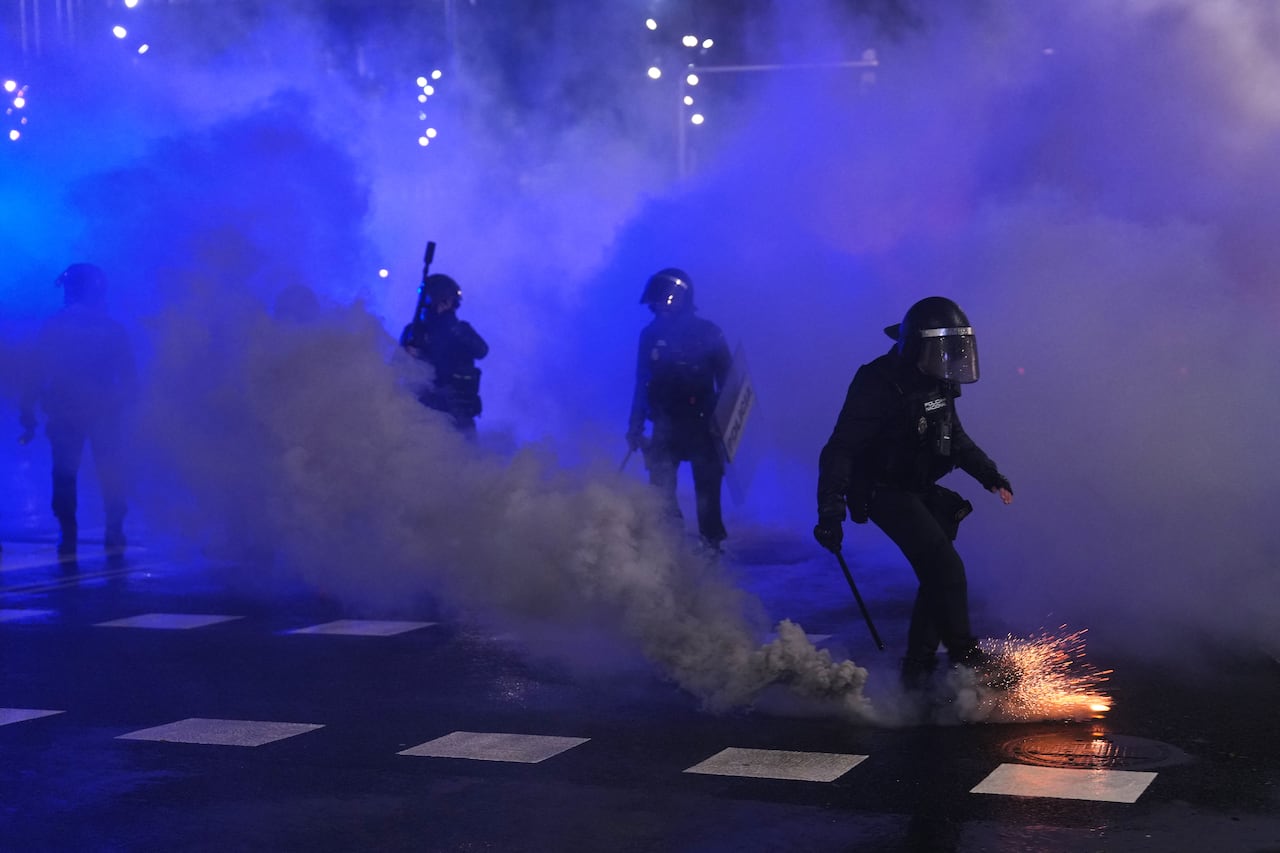
Some riots erupted following the marches, and when fires were set, it prompted police to fire tear gas. (Manu Fernandez/The Associated Press)
Discussion on strike’s effectiveness
Unions proclaimed the strike a success, whereas Spain’s business associations contended it was ineffective.
“The strike has surpassed the expectations of the labor unions,” asserted Unai Sordo, secretary-general of CCOO, one of the two unions coordinating the strike for a nation with 22 million registered workers.
CCOO and UGT, the other major union involved, reported significant work stoppages in crucial sectors. They indicated that stoppages reached 90% in the automotive and port industries, 85% in the meat sector, 82% in waste management, and 75% in energy. Many schools and universities were also closed.
However, the leading business group, CEOE, labeled the strike a “failure,” claiming overall participation was only five percent.
-
How did Spain’s housing crisis get so bad it forced the PM to call a snap election?
-
Spanish pensioner Maricarmen, symbol of country’s housing crisis, dead at 87
Both unions and CEOE acknowledged that participation was higher in heavy industries and transportation, while it was lower in sectors such as retail and dining.
Approximately five percent of flights were canceled at airports nationwide on Wednesday, according to Spain’s airport authority, AENA.
Initial reports indicated minor incidents during the early hours of the strike, with unions noting clashes with police near Madrid’s central wholesale market. In some locations, police resorted to using pepper spray against demonstrators.
Law enforcement reported that 49 arrests had been made across Spain in connection to the strike.
Average rent has nearly doubled in the last decade
Over the past decade, the average rent in Spain has nearly doubled, straining household finances and provoking voter discontent.
Public outrage intensified following the eviction of an 87-year-old woman from her residence in Madrid last month. The subsequent death of Maricarmen, as she became known, turned her into a symbol for many Spaniards who feel they cannot aspire to homeownership.
Housing activists leveraged the public outcry surrounding Maricarmen’s eviction to organize the strike and quickly garnered union support.
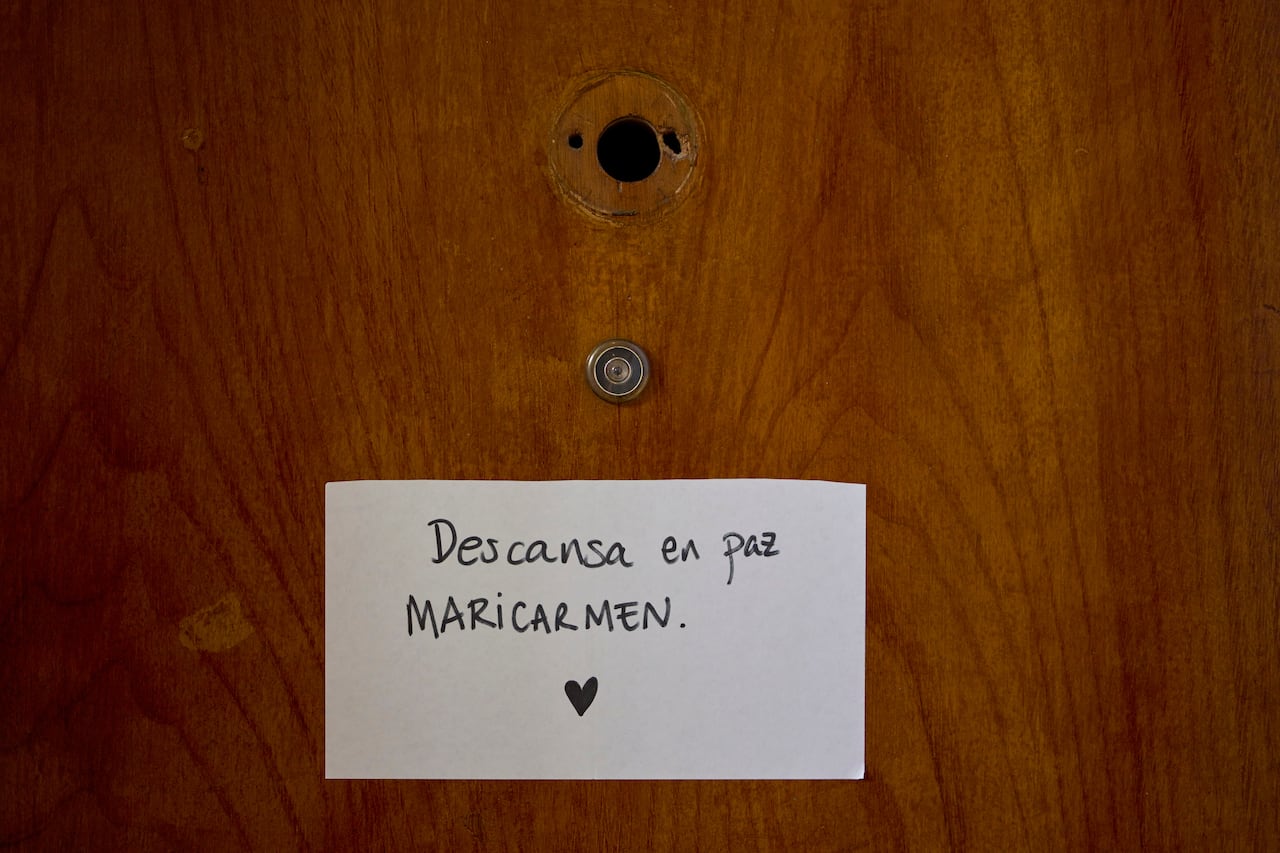
A sign on the door of the home in Madrid where Maria del Carmen Abascal, 87, was evicted reads ‘Rest in peace, Maricarmen,’ on Oct. 8. (Manu Fernandez/The Associated Press)
Housing activists are advocating for automatic lease renewals to safeguard renters and are calling for additional measures. Unions are pressing for more public housing and a new minimum wage agreement.
Following recent protests regarding Maricarmen’s situation, Spanish Prime Minister Pedro Sanchez announced an early election, aiming to secure an additional four years in power for his leftist coalition. The election is scheduled for November 29.