


Lucas Brehaut had high hopes for his research, but he didn’t anticipate the level of interest wildlife in Newfoundland would have in his work. The animals in the region have been causing disruptions to his study on forest regrowth after wildfires.
As a wildfire research scientist with the Canadian Forest Service, Brehaut is investigating the regrowth patterns of forests in Atlantic Canada post wildfires, given the increasing frequency of forest fires in the area despite its cooler and wetter climate compared to other parts of the country.
Following a forest fire near Grand Falls-Windsor, N.L., in 2022, Brehaut initiated a study to observe forest regeneration in a warming climate due to global warming effects. To facilitate his research, he and his team had to transport and install 19 open-top chambers (OTCs) in the forest to monitor seedlings. These OTCs simulate temperature increases of one to three degrees, mimicking a warming planet’s conditions. Currently, Brehaut’s research is in its third year of a five-year study.
-
The only known woolly dog pelt has returned to Canada. It’s a ‘powerful moment’ for Indigenous communities
-
These tiny endangered raccoons make their own toys out of trash
Despite expecting challenges like treacherous terrain and severe weather conditions in Newfoundland, Brehaut encountered an unexpected obstacle during a routine check-in in September 2023.
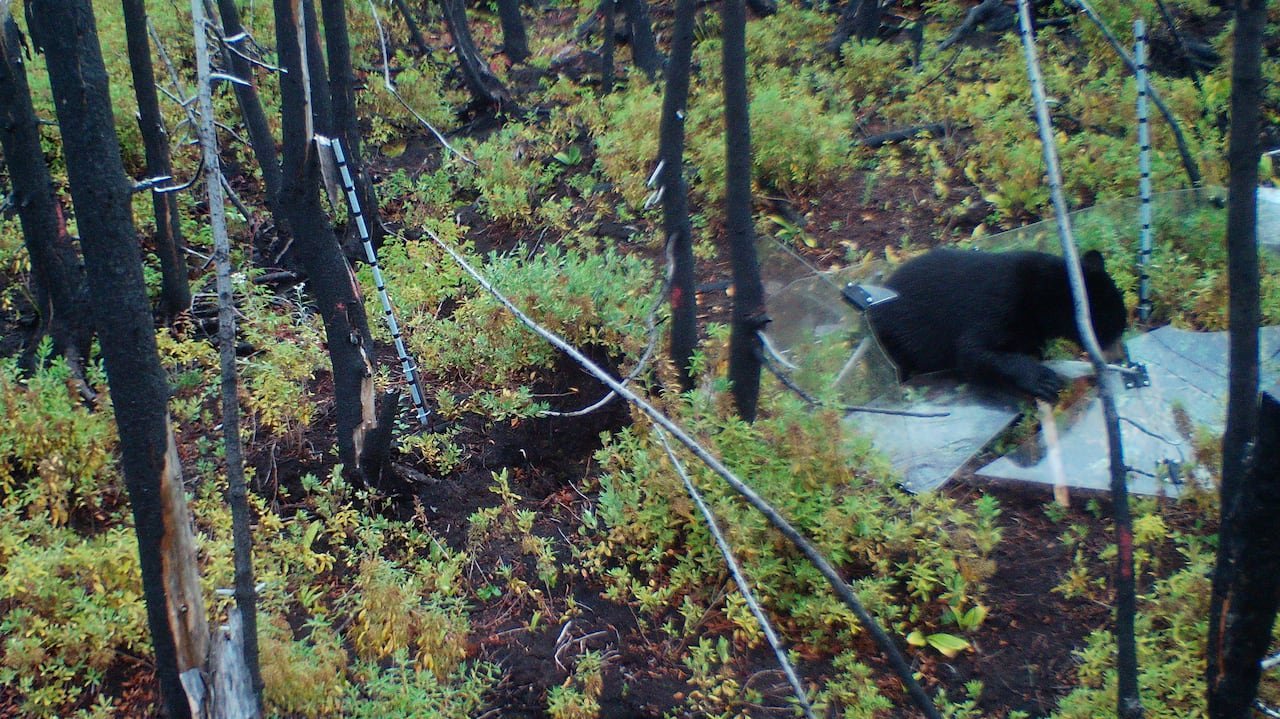
He discovered that several of the OTCs had been tampered with by a variety of animals, including caribou, moose, black bears, wolves, rabbits, and owls. Surveillance cameras initially intended for tracking snow depth revealed the culprits responsible for damaging 11 out of 19 sites, with some animals even absconding with temperature sensors.
</