

Some Alberta separatists are not just focused on separating the province from Canada but are more interested in strengthening trade ties with the southern neighbor. According to independence leader Keith Wilson, Alberta’s proximity to the United States, the largest economy globally, offers significant trade advantages. The main concern raised is the level of control exerted by Ottawa over Alberta.
Alberta, known for its massive oil production of five million barrels per day, with over two-thirds of this oil being exported to the United States, underscores the crucial role of trade with the US. However, the reality differs from a graphic shared by Wilson, showing a direct southern flow from Alberta. In actuality, the majority of Alberta’s oil is transported through pipelines passing through other western provinces before entering the United States.
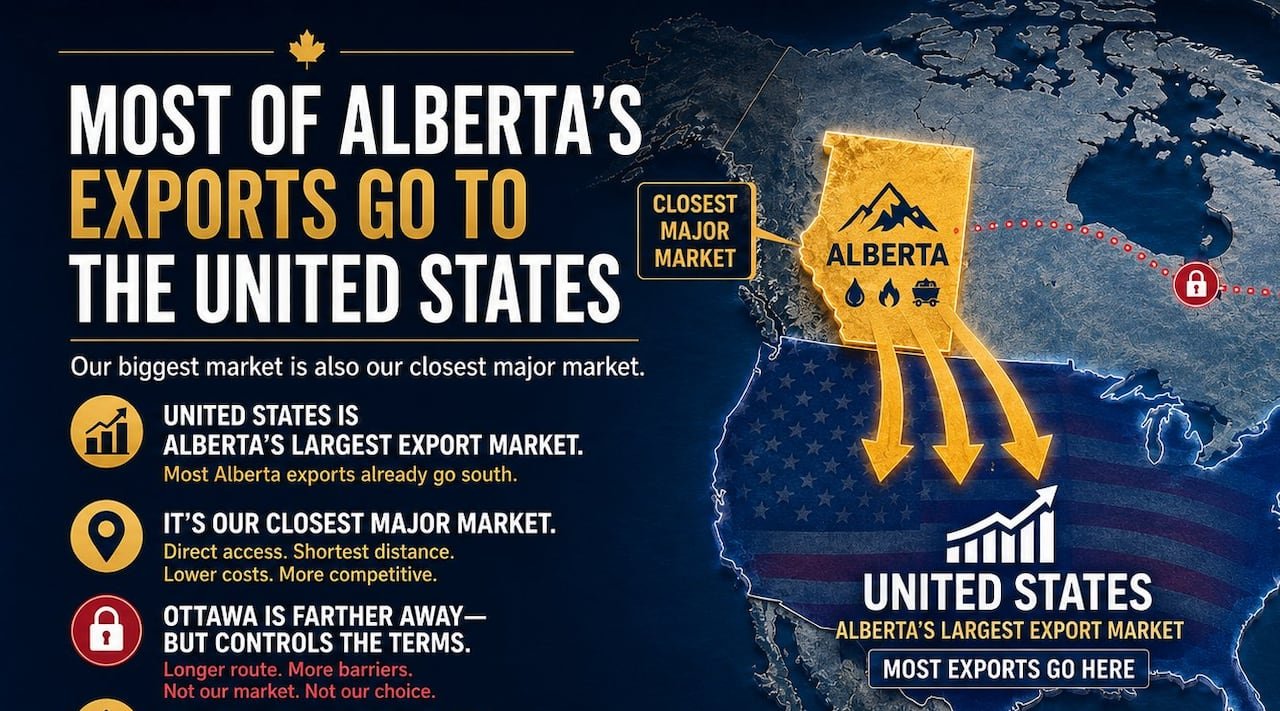
Regarding natural gas exports, the situation is more complex, as all gas pipelines from Alberta to the US transit through other Canadian provinces. This reliance on third-party territories for key exports could complicate an independent Alberta’s trade relations, necessitating negotiations for transit agreements.
While experts suggest that agreements for trade flow could be reached post-independence, the process would be intricate, involving renegotiating deals and establishing new trade relationships. The potential for trade disruptions, tariffs, and the need for transit agreements with neighboring provinces could pose challenges for an independent Alberta.
Wilson envisions leveraging Alberta’s strength in negotiations with other provinces post-independence, emphasizing the need to reevaluate trade and mobility relationships, particularly with British Columbia’s geographical constraints.

Secession discussions highlight the challenges of landlocked Alberta and the potential implications for trade relationships. The intricate web of trade negotiations and the reliance on existing trade routes pose uncertainties for Alberta’s future trade dynamics.
Considering the historical context of Alberta’s oil and gas exports and the interprovincial trade dynamics, the transition to an independent state would require navigating complex trade agreements and ensuring the continuity of trade relations with key partners, particularly the United States.

Future trade negotiations would need to address complex issues such as pipeline transshipments, potential tariffs, and the interdependence of trade routes. The outcome of these negotiations remains uncertain, highlighting the need for thorough planning and strategic decision-making for an independent Alberta’s economic future.
Tag: rewrite-pending