

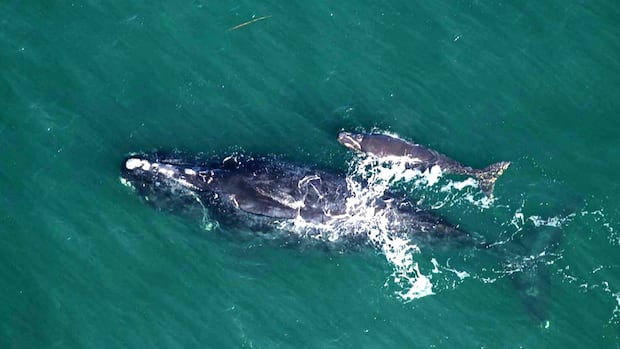
The year 2026 saw the highest number of North Atlantic right whale births since 2009, with 24 calves recorded, including a newborn observed with its mother named Silt off the Quebec coast in September. Despite this increase, these young whales are still at risk from persistent deadly threats.
Current estimates indicate that the population stands at merely 382 individuals, prompting the North Atlantic Right Whale Consortium to urge immediate measures to protect the species’ future.
Heather Pettis, who heads the right whale research initiative at the Anderson Cabot Center and leads the North Atlantic Right Whale Consortium, stated, “The newly issued population estimate highlights the need for increased efforts to conserve this species.”
“The population hasn’t yet established a clear recovery trajectory and remains highly susceptible to entanglements and ship strikes — dangers that we have the capability to mitigate.”
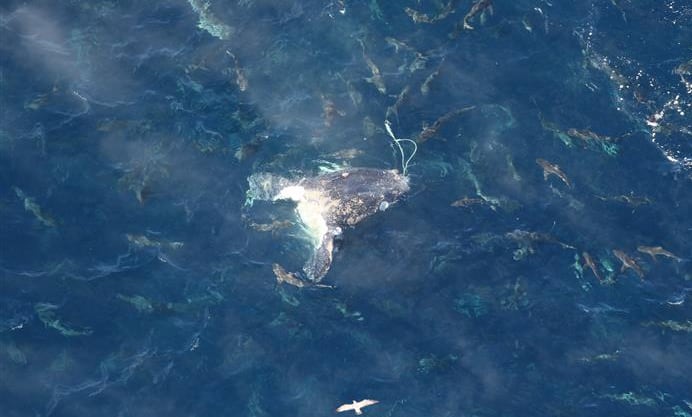
On January 27, a four-year-old male named “Division” was found off the coast of North Carolina after dying from severe entanglement associated with Canadian snow crab gear. In February, a three-year-old female was discovered dead along a barrier island off Virginia’s eastern shore. (Submitted by Clearwater Marine Aquarium Research Institute)
In 2026, two whale deaths have been recorded: one due to entanglement and the other from an unknown cause. The body of a whale named Division was identified off North Carolina in January.
This four-year-old male was initially seen in 2025 with fishing line entangled around his head and mouth, piercing his blowhole and lodged in his jaw.
Shortly thereafter, the New England Aquarium confirmed the presence of a deceased three-year-old female right whale off Virginia. In addition to these fatalities, there have been eight recorded instances of human-induced injuries to right whales this year, comprising seven entanglements and one vessel collision.
Philip Hamilton, of the New England Aquarium in Boston, has been studying North Atlantic right whales since the 1980s, driven by a deep concern for these marine mammals that have faced extinction for many years.
Hamilton expressed the difficulty of imagining the pain a whale experiences when caught in fishing gear.
“Think about being wrapped in rope that moves with you … literally cutting into your body,” he remarked. “It is truly excruciating. They lack arms, making the suffering … almost unimaginable.”
Hamilton knows many of the remaining North Atlantic right whales by name but has a particular fondness for Admiral.
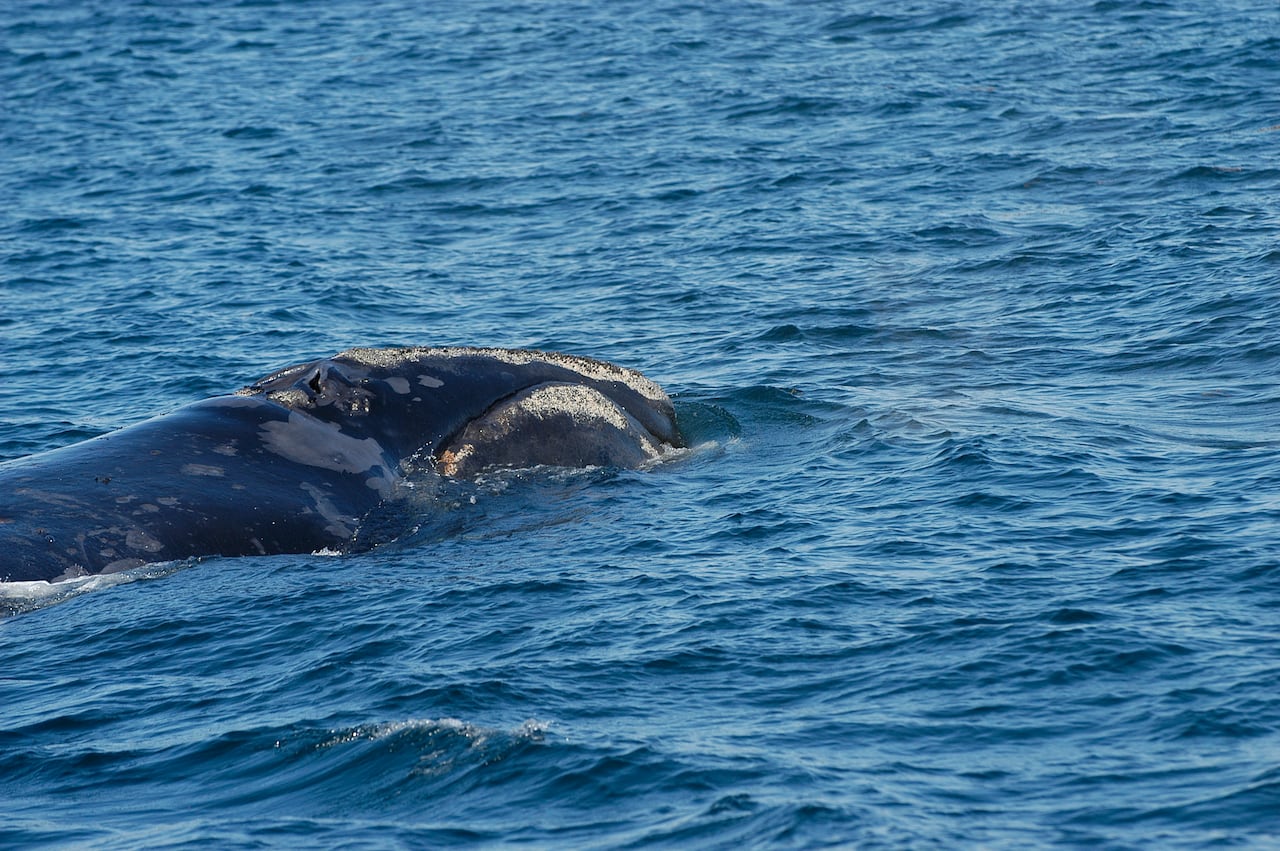
Admiral is a favorite among biologists due to her playful behavior at the surface. She faced a serious entanglement in 2007 and has not been sighted since. (Submitted by New England Aquarium)
“She was an adult when first spotted in 1980, and she felt like the matriarch of the population. She was so large that I could identify her from a mile away as she would shoot up like a submarine and bounce on the surface,” Hamilton reminisced.
“She was known for doing headstands in certain areas, so you would just see her tail sticking up out of the water.”
However, the beloved Admiral has not been seen for over ten years after suffering a severe entanglement with fishing lines.
“The right whales are doing everything they can. We must ensure we are doing our part to protect them, as they cannot do more than they already are,” Hamilton concluded.
Whale-safe gear
In February, the Canadian government introduced a Whale-safe Gear Strategy. They have been trialing ropeless fishing gear in eastern Canada, including parts of western Newfoundland.
Andrea Morden, who is involved with DFO whale management, stated that collaboration with fishers has led to strides in reducing entanglements and illustrating what a whale-safe fishery could look like.
“Our findings indicate that a universal gear solution will not suffice for the diverse fisheries in eastern Canada,” she noted.
Morden pointed out that certain fisheries, such as crab and lobster, pose higher risks due to their extensive use of ropes. She mentioned that DFO is working with the fishing sector to explore gear modifications that promote both economic sustainability and the recovery of the North Atlantic right whale population.
The focus is not solely on ropeless gear; innovations that reduce the likelihood of whale entanglement, like lower breaking-strength rope and on-demand fishing gear that operates remotely, are also being developed.
Whale aware
With a beaming smile, marine mammal scientist Jack Lawson from Newfoundland expressed that residents of Newfoundland and Labrador are fortunate to experience the ocean, including sightings of a North Atlantic right whale earlier this summer. However, Lawson emphasized that this closeness to nature brings with it a sense of responsibility.
“We are privileged to have these animals visiting our waters each year, and we also bear the responsibility to exercise caution around them,” said Lawson, who conducts research on the North Atlantic right whale.
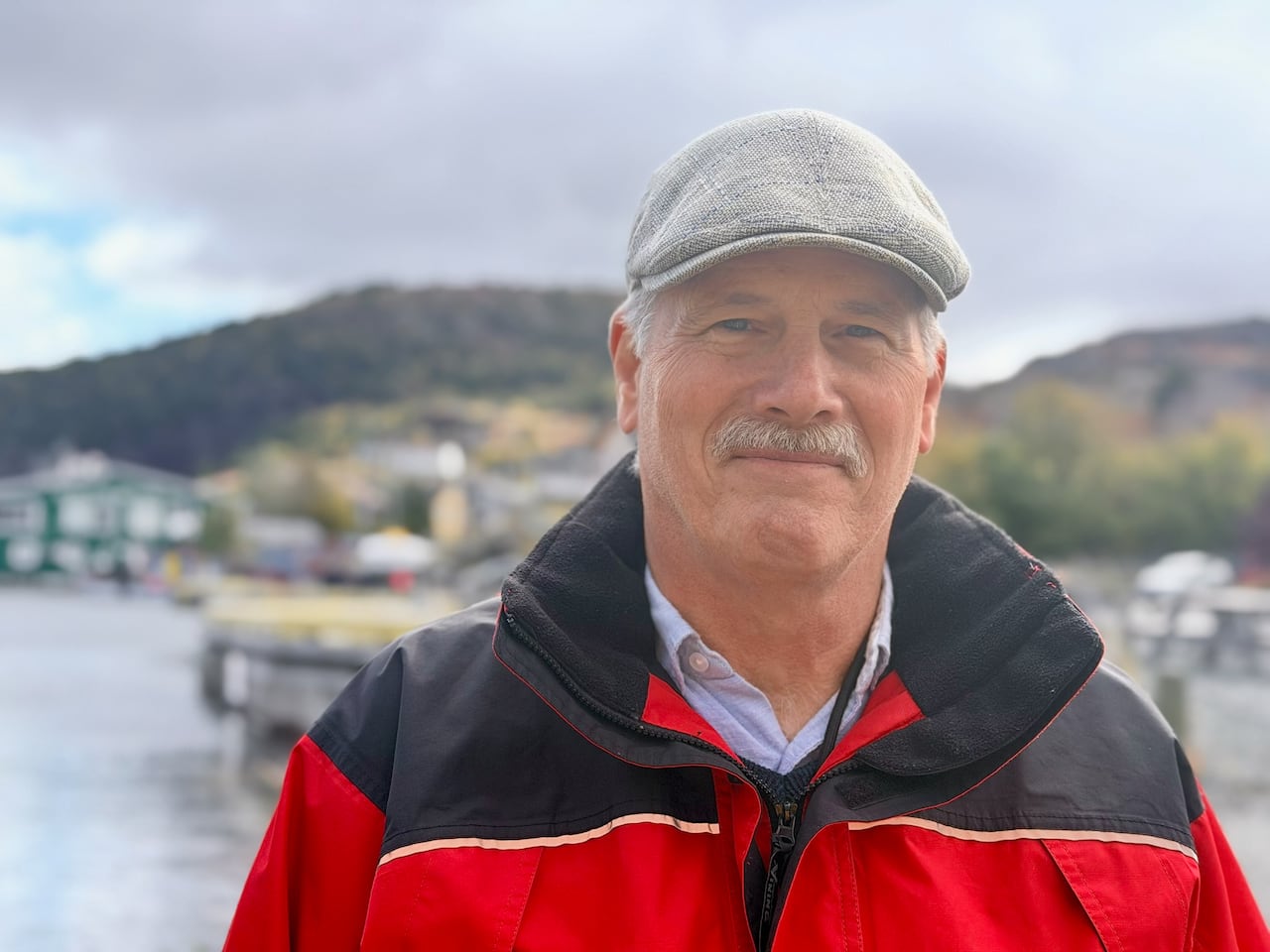
Jack Lawson is thrilled to see North Atlantic right whales in the waters of Newfoundland and Labrador. However, he is concerned for their safety as they approach the shorelines. (Leila Beaudoin/CBC)
He stressed that it is essential to raise awareness — among both small boats and large vessels — about the presence of these mammals, as a collision could be deadly.
-
A surprise baby right whale spotted near Quebec is bringing ‘a lot of hope’ for the species
-
North Atlantic right whales at greater risk of collision with boats at night: study
Experts indicate that forecasting the locations of North Atlantic right whale collisions is challenging. The species’ movements are greatly affected by seasonal migration patterns and calving requirements, which is why researchers are advocating for improved cooperation between Canada and the United States.
Pettis stated that the recovery of the species hinges on consistent protective measures in both countries.
Download our free CBC News app to sign up for push alerts for CBC Newfoundland and Labrador. Sign up for our daily headlines newsletter here. Click here to visit our landing page.