

On Friday, health officials from the United Nations acknowledged advancements in the Ebola response six months after the outbreak raised global alarms. However, they warned that the virus is still spreading to more isolated and perilous regions of Congo.
Currently, confirmed cases have exceeded 11,100, making this the second-worst Ebola outbreak recorded, with the virus reaching areas in eastern, central, and western Africa. According to the Africa Centres for Disease Control and Prevention (Africa CDC), over 5,400 fatalities have been reported thus far.
Identified by health authorities in mid-May, the outbreak is fueled by the uncommon Bundibugyo strain of the virus, which lacks approved treatments or vaccines.
Chikwe Ihekweazu, the head of the World Health Organization’s Health Emergencies Programme, stated, “We do see encouraging signs,” referencing the decline in cases in previous hotspots like Bunia in eastern Democratic Republic of Congo.
“Nonetheless, we are now observing cases emerging in more rural and hard-to-access areas.”
-
Congo’s Ebola outbreak tops 11,000 cases as disease keeps spreading
-
1 in 4 Ebola deaths are children in Democratic Republic of Congo’s worst outbreak
-
Exclusive
‘No one is safe’ as Ebola outbreak surges to more than 10,000 cases, Africa’s top doctor warns Canada
He mentioned that children represent over one third of the fatalities, while the transmission rate remains high, with up to 500 new cases reported each week.
“The primary challenge facing the response at this moment is the increasing insecurity,” he noted, referencing WHO statistics indicating 80 attacks on health facilities and personnel to date.
“Violence hampers our ability to reach those in need. It disrupts monitoring, interferes with treatment, and forces people to relocate, hindering their access to medical care,” Ihekweazu explained.
A recent assault by a rebel group in North Kivu resulted in the deaths of 66 civilians, including three health workers. Additionally, three medical facilities were vandalized and set ablaze, and over 1,000 monitored contacts were lost due to the violence. Three confirmed Ebola patients are also currently untraceable.
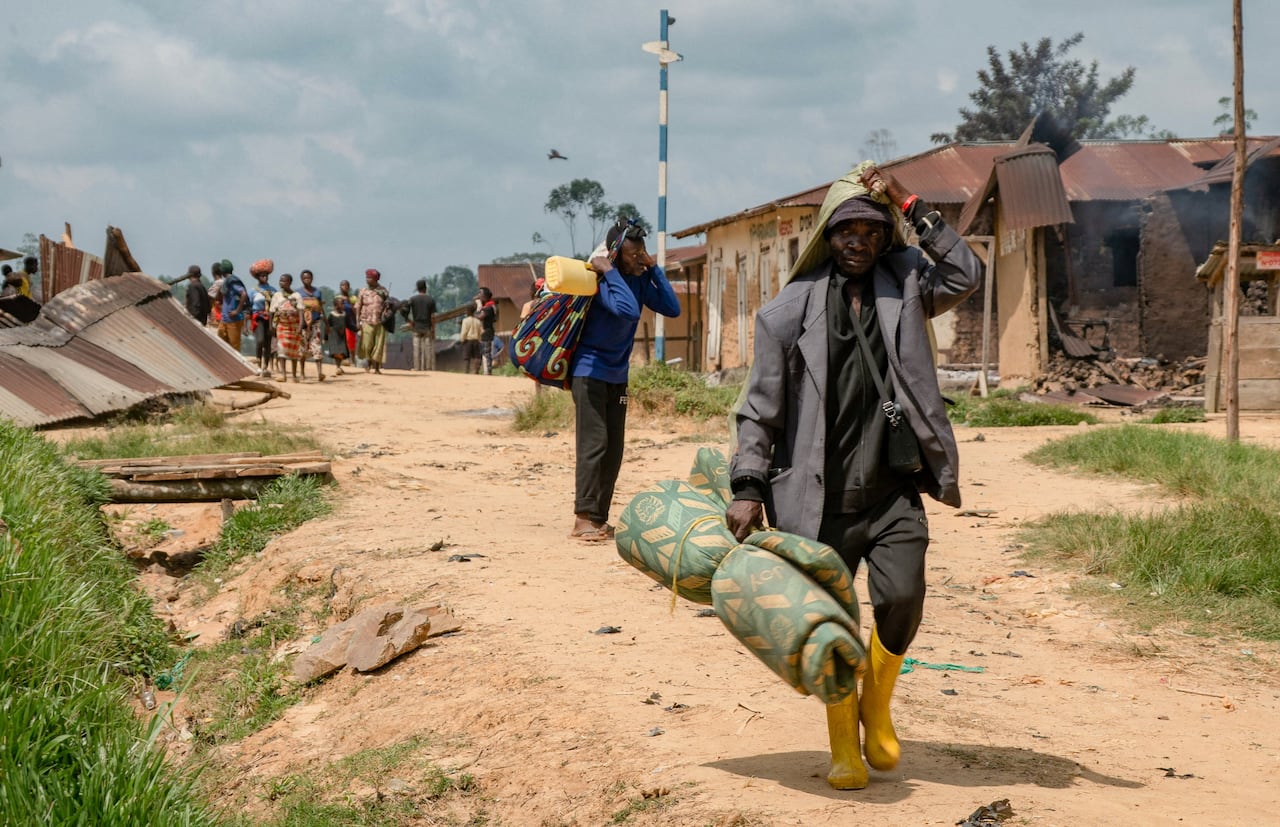
Congolese civilians carry their belongings as they flee following an attack by Islamic State-linked militants, who burned homes, a health post and other buildings, in Cantine-Aloya, Democratic Republic of Congo, on Nov. 6. (Gradel Muyisa Mumbere/Reuters)
Dr. Marie Belizaire, an emergency director at the WHO, emphasized the need for an immediate cessation of hostilities and violence during a briefing.
Belizaire expressed that the ongoing violence jeopardizes any progress achieved in the past six months.
“Healthcare workers and humanitarian teams must have safe access to impacted communities, allowing patients to seek care without fear,” she stated.
Surveillance remains a challenge
Since the outbreak was declared on May 15, Ebola has affected eight provinces.
The Africa CDC reports some advancements, noting that the capacity for laboratory testing and the number of patient beds have significantly increased. Initially, there were only two laboratories operating, but now 30 testing facilities are functioning across the impacted health zones.
“At the onset of this response, we could only test dozens of cases, but now we have the capacity to process over 4,300 samples daily,” Dr. Wessam Mankoula, a medical epidemiologist at the Africa CDC, shared.
There are currently 2,000 available beds for patient admission, and more than 3,000 individuals have recovered from Ebola.
Despite these improvements, Mankoula pointed out in a briefing that simply increasing beds and testing capabilities will not suffice to contain the outbreak.
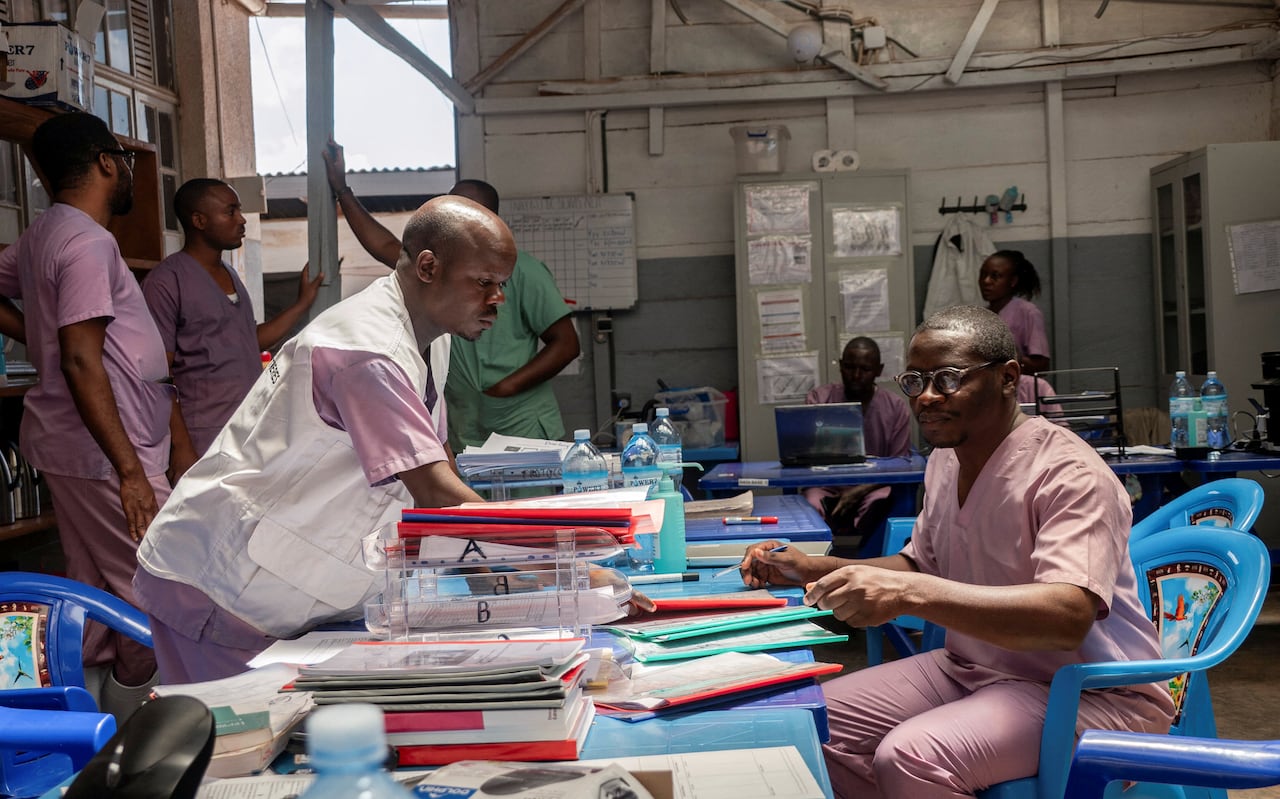
Dr. Toussaint Selemani, head of medical activities at the Ebola Treatment Center of the Kitatumba Reference Hospital, talks to his medical colleagues in Butembo in October. (Gradel Muyisa Mumbere/Reuters)
“Surveillance is a significant challenge — identifying all potential contacts is crucial,” he emphasized. “This is vital for the success of our response.”
Currently, only 11 percent of new cases arise from contact lists, and nearly two-thirds of fatalities continue to occur outside healthcare facilities.
Limited access to funds causes ‘dysfunctions’
In a briefing, the Africa CDC noted that, according to its monitoring, $3 billion USD has been pledged to address the crisis, but only 45 percent has been distributed.
Aid is not reaching those in dire need, as indicated by the French medical charity Doctors Without Borders, which highlighted issues including untrained and unpaid personnel, ambulances lacking fuel, and a shortage of surveillance teams and supplies to safely manage suspected cases.
“Despite the substantial funds allocated for the response, many frontline responders find themselves attempting to control the outbreak without adequate resources,” Dr. Javid Abdelmoneim, international president of Doctors Without Borders, stated on Thursday.
“Our teams are frequently left astonished by the dysfunctions they encounter in various regions. Six months into the response, this situation is utterly unacceptable.”
Doctors Without Borders urged the Congolese government and UN agencies, including the World Health Organization, to ensure that the mobilized resources effectively translate into tangible support on the ground.