

In a rear section of a Staples Canada outlet located north of Toronto in Richmond Hill, Mike Rinaldi finds himself surrounded by a child’s fantasy.
Behind the chief merchandising officer, one can see an array of Hot Wheels, Barbies, and squishy dumplings, along with bins packed with plush toys modeled after junk food and bouncing balls. A massive Lego spaceship looms above, while birthday balloons float in the background.
This vibrant scene is the result of a collaboration with Toys “R” Us Canada — the iconic toy retailer recently emerging from creditor protection and now affiliated with the U.S. company behind Party City, Chia Pets, and the Elvis Presley attraction Graceland.
To revive the cherished brand, Toys “R” Us and its subsidiary Parties “R” Us are setting up shop in parts of 300 Staples Canada locations by the end of next year. The store Rinaldi is visiting, conveniently close to Staples Canada’s headquarters, is the inaugural location to undergo this transformation.
A lot is at stake for both businesses. The owners of Toys “R” Us Canada, Next Century and its affiliate Ad Populum, will be gauging customer loyalty to the brand. At the same time, Staples Canada aims to show customers that it offers more than just office and school supplies or printing services.
In essence, Rinaldi is on a mission to demonstrate that “Staples is evolving.”
He emphasized the goal is to create a place where individuals can “accomplish multiple tasks in a fast-paced world,” he noted.
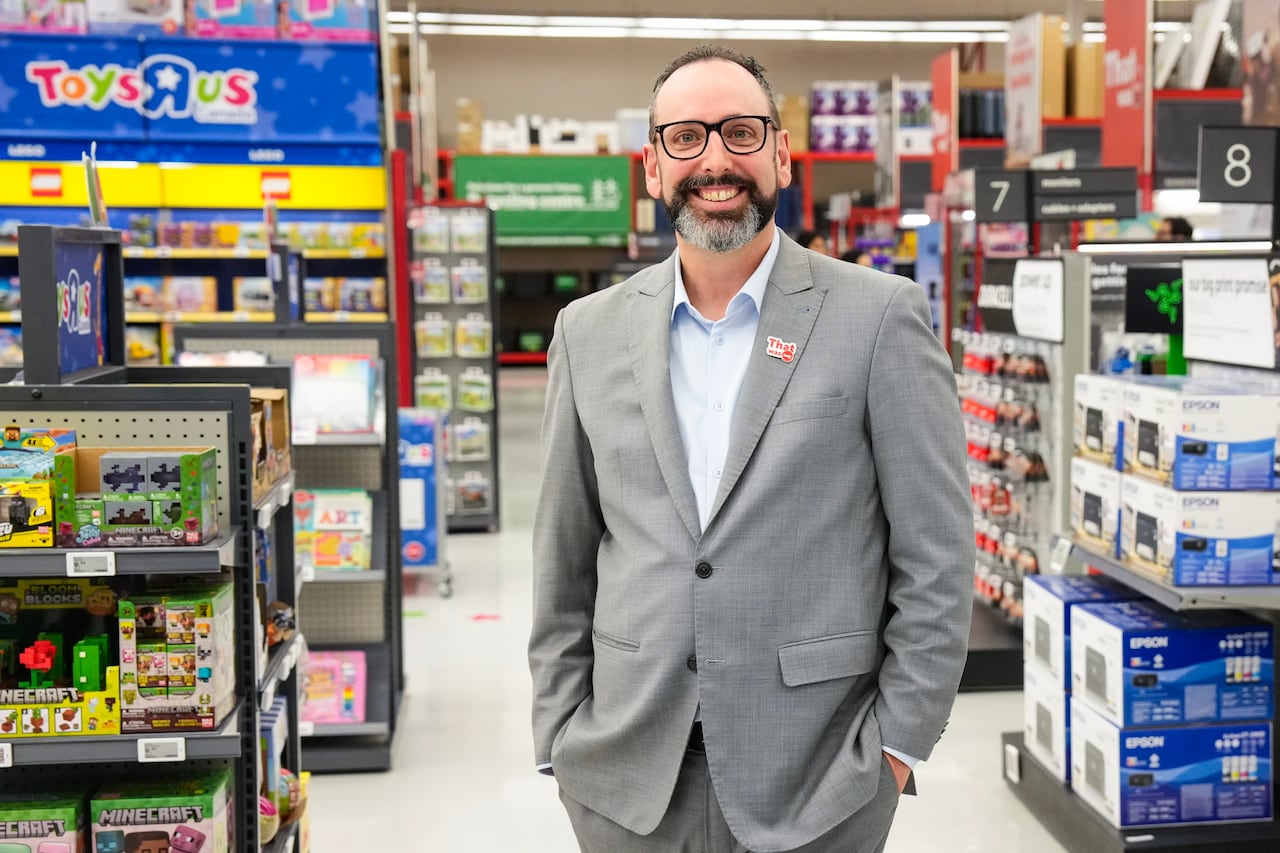
Mike Rinaldi, chief merchandise officer at Staples Canada, states that the new offerings signify an evolving Staples brand. (Chris Young/The Canadian Press)
In line with this vision, several of the retailer’s stores have introduced workspaces, coffee shops, and Service Ontario branches that handle drivers’ licenses, health cards, and vehicle permits in recent years. Numerous locations now feature drop-off points for Amazon returns, while others are expanding travel sections selling suitcases, neck pillows, and toiletry bags.
Furthermore, it aims to become the go-to destination for birthdays, Christmas, and any occasion when customers require puzzles or piñatas.
According to Rinaldi, it was logical to utilize existing space intended for children’s products and events to accommodate this partnership. While Staples Canada had sold toys, they were primarily educational. The collaboration with Toys “R” Us Canada significantly broadens that selection under a nostalgic brand.
Rinaldi can’t help but smile as he reminisces about purchasing wrestling action figures from the toy store in the ’80s, which he and his friends wrapped in newspaper to transport home during a downpour.
“The newspaper left marks on the figures, and they were ruined, but I was so thrilled to have them,” he recalled.
That visit to Toys “R” Us took place when the chain was just starting in Canada and rapidly becoming the go-to destination for children’s desires.
Retailer adapting to a shifting market
However, as Walmart, Costco, and Amazon began to more aggressively capture market share with lower prices, Toys “R” Us struggled. When it was acquired by entrepreneur Doug Putman from Ancaster, Ontario in 2021, the retailer’s decline was already apparent.
Recent years have been marked by inflation, increased labor costs, supply chain issues, and a shift toward online shopping — all factors that led Toys “R” Us Canada to declare insolvency in February and sell its trademarks to Ad Populum in June.
Staples Canada has also faced similar challenges.
“Its primary business — office supplies, paper, ink, and printing — has been on the decline for years. Shifting customer preferences and the rise of remote work have accelerated this trend,” stated Liza Amlani, founder of the consultancy Retail Strategy Group, in an email.
“When core categories shrink, you either downsize the store or provide customers with new motivations to enter. Staples is opting for the latter.”
-
Toys ‘R’ Us Canada secures court approval to divide business among three buyers
-
Owner of troubled Toys ‘R’ Us Canada proposes rebranding in court documents
Although it may take time for shoppers to associate established retailers with new offerings like coffee or coworking spaces, Amlani believes that toys represent a promising venture for Staples.
“Toys and party supplies appeal to the same parents who shop for back-to-school items at Staples,” she remarked. “This extends the relationship and … encourages families to return for more than just back-to-school items.”
Moreover, the toy industry can be quite profitable. If you capture a customer when their child is very young, you could secure their toy purchases for many years ahead.
Nonetheless, many companies are competing for the same customer base. Amazon, Costco, and Walmart leverage their high sales volumes to offer lower prices, which pressures competitors and attracts consumers.
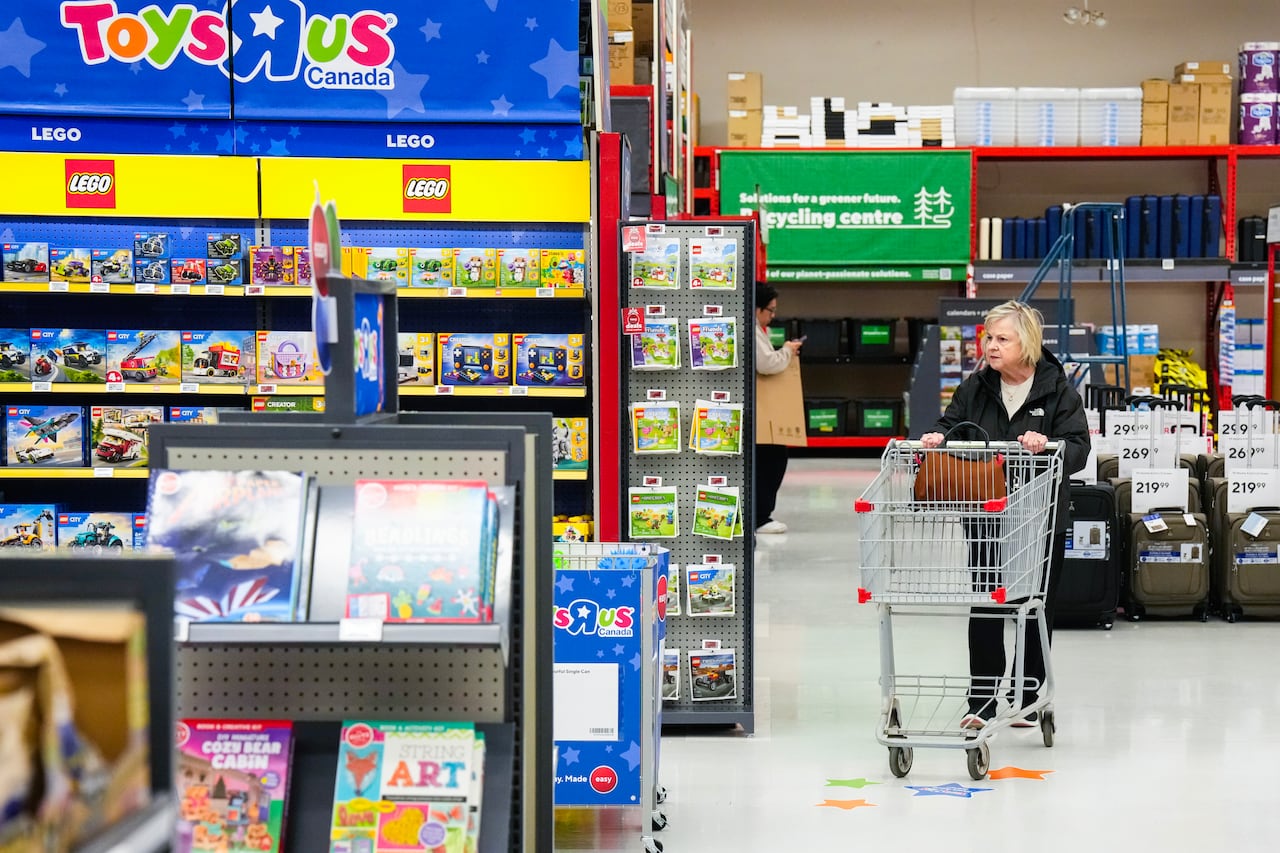
Liza Amlani, a retail consultant, observes that Staples’ core business has been declining for years, and incorporating Toys ‘R’ Us products is one strategy to address that. (Chris Young/The Canadian Press)
At the same time, major brands like Lego have aggressively broadened their own retail presences, and the tariff conflict has led more Canadians to support local toy shops.
Yet, perhaps the most significant hurdle Staples faces is raising awareness, according to Graham Heuman, retail insights lead at JC Williams Group.
“They will need to put considerable effort into ensuring that consumers recognize Staples as a place to buy toys through Toys ‘R’ Us,” he noted.
“Some shoppers may be confused by the store-within-a-store concept if they are not familiar with it.”
The company has been addressing this potential awareness gap by promoting itself on social media, and the entrance to the Richmond Hill Staples features a Geoffrey giraffe mascot peeking through a window that also states, “Toys ‘R’ Us lives here now!”
Upon entering, it’s hard to overlook the vibrant signage inviting customers to the toy section, complete with stations to experiment with Magna-Tiles and Kinetic Sand.
Rinaldi mentioned that the chain intends to attract visitors by organizing crafting events and play sessions in collaboration with Lego, Ravensburger, and others.
However, on a recent Tuesday afternoon, most patrons seemed to be drawn in by chance.
A woman, who had previously visited the print center, was chasing after a toddler captivated by the toy section, while an older gentleman who had browsed the electronics department rummaged through a bin filled with stuffed toys shaped like pizza boxes and ramen bowls.
Rinaldi took a moment to ask one man exiting the parcel drop-off area for his thoughts on the Toys “R” Us section.
“Are you going to put a Walmart in here?” the man inquired as he hurried toward the exit. “What’s next?”
Rinaldi could only chuckle nervously.