

Chris Warburton Hulme expressed her shock upon discovering that the latest 50 percent tariffs imposed by U.S. President Donald Trump on nearly $28 billion of Canadian products encompassed original art pieces.
The mixed-media artist from Eastern Passage, N.S., found this to be the final straw. Even though around half of her clientele is American, she has decided to cease shipping her artwork to the United States.
“No more shipping to the U.S. It’s going to remain in Canada,” Hulme stated.
“It’s original art. It should be considered free speech and freedom of expression. Imposing tariffs on it restricts everything that an artist should be able to do.”
The new tariffs impact various forms of Canadian art, including paintings, drawings, collages, decorative plaques, engravings, prints, sculptures, and more.
Although the Canadian government has announced dollar-for-dollar counter-tariffs on imports from the U.S., effective September 8, these retaliatory measures do not cover original artwork.
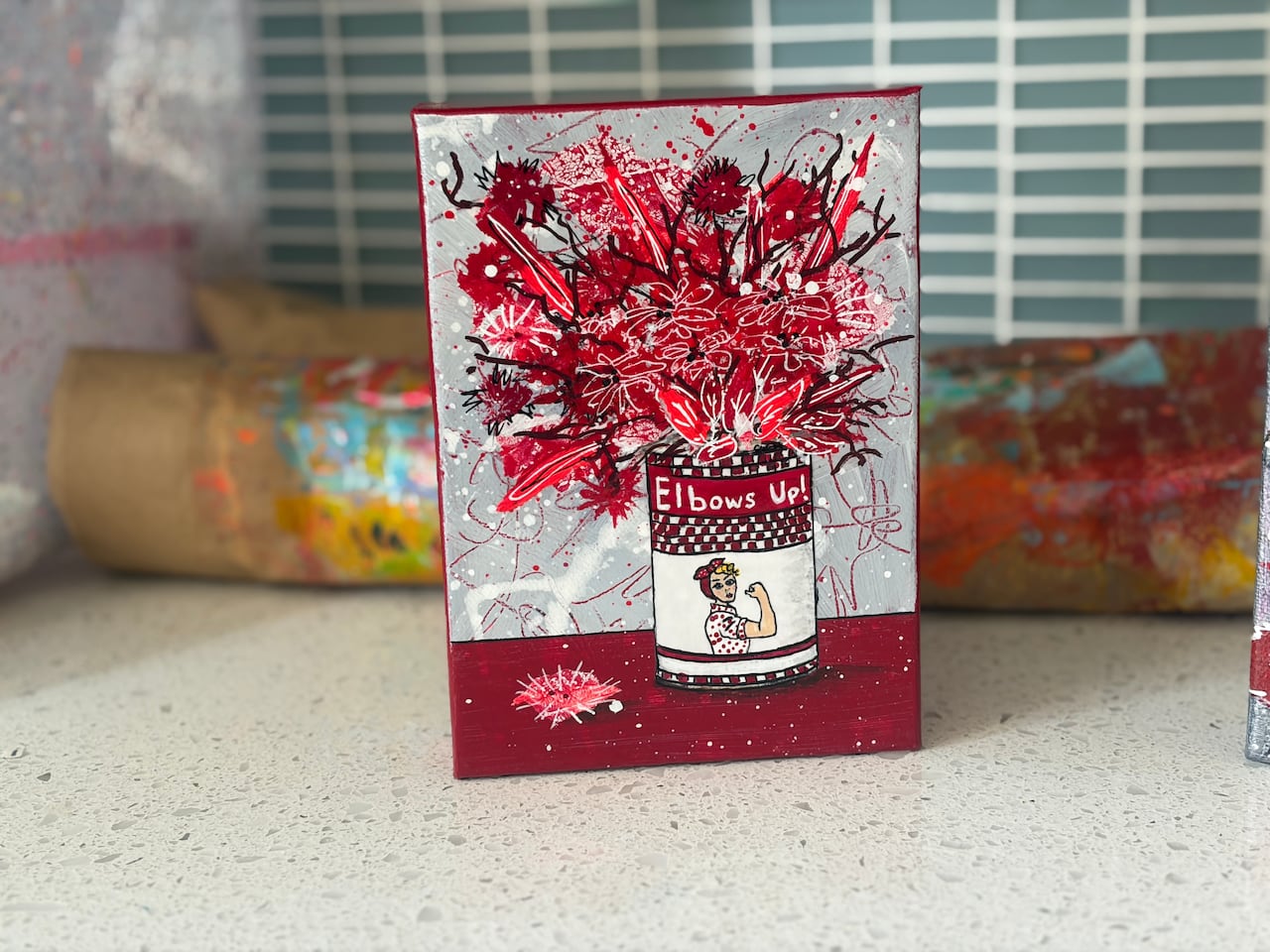
One of Hulme’s latest pieces featuring the iconic pro-Canadian phrase, ‘Elbows Up!’ (Celina Aalders/CBC)
Cole Harbour artist Miranda Jordan has also stopped all sales to the U.S.
She mentioned that navigating the constantly shifting regulations and shipping limitations has been challenging since the trade war began.
“I don’t work for the U.S. government, and I refuse to act as an unpaid customs clerk for them, so I’m done with it,” she remarked.
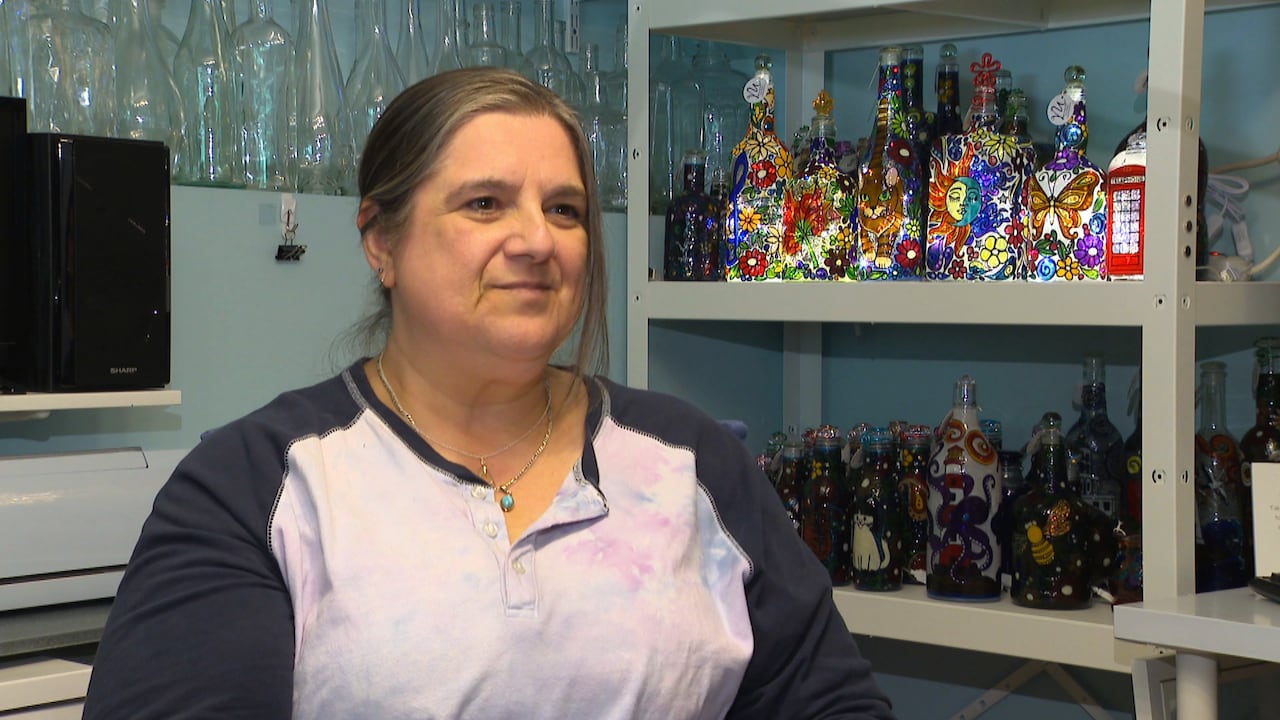
Miranda Jordan paints on repurposed bottles and glassware to create accent lamps. She sells her products online, which has been her full-time gig for years. (David Laughlin/CBC)
“I would prefer to create designs that resonate with Canadians and sell to them.”
Journalist and former CBC Radio host Tod Maffin expressed his desire to leverage his extensive social media following to assist small businesses affected by the recent tariffs.
He and his wife have launched an online directory to allow people to promote their products and for customers to explore locally made goods.
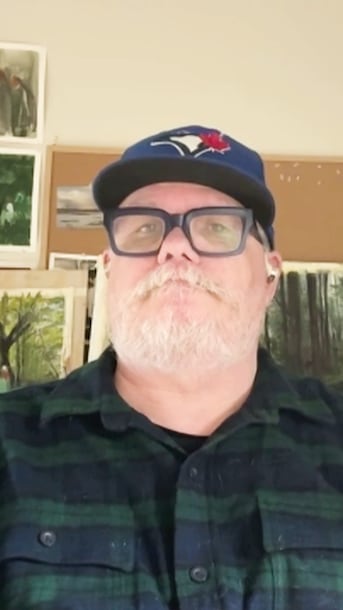
Ottawa-based visual artist Michael Harrington says he cancelled an upcoming exhibition in Boston after learning the Trump administration had implemented a 50 percent tariff on Canadian art.
Maffin pointed out that while the federal government has been providing financial assistance for larger industries, he is concerned that smaller entities may be overlooked.
“This often neglects many smaller components of our economy, such as small businesses, home-based ventures, and hobby enterprises. They might not employ numerous people, yet they can be crucial for putting food on the table for families,” Maffin elaborated.
“I believe that is equally important.”
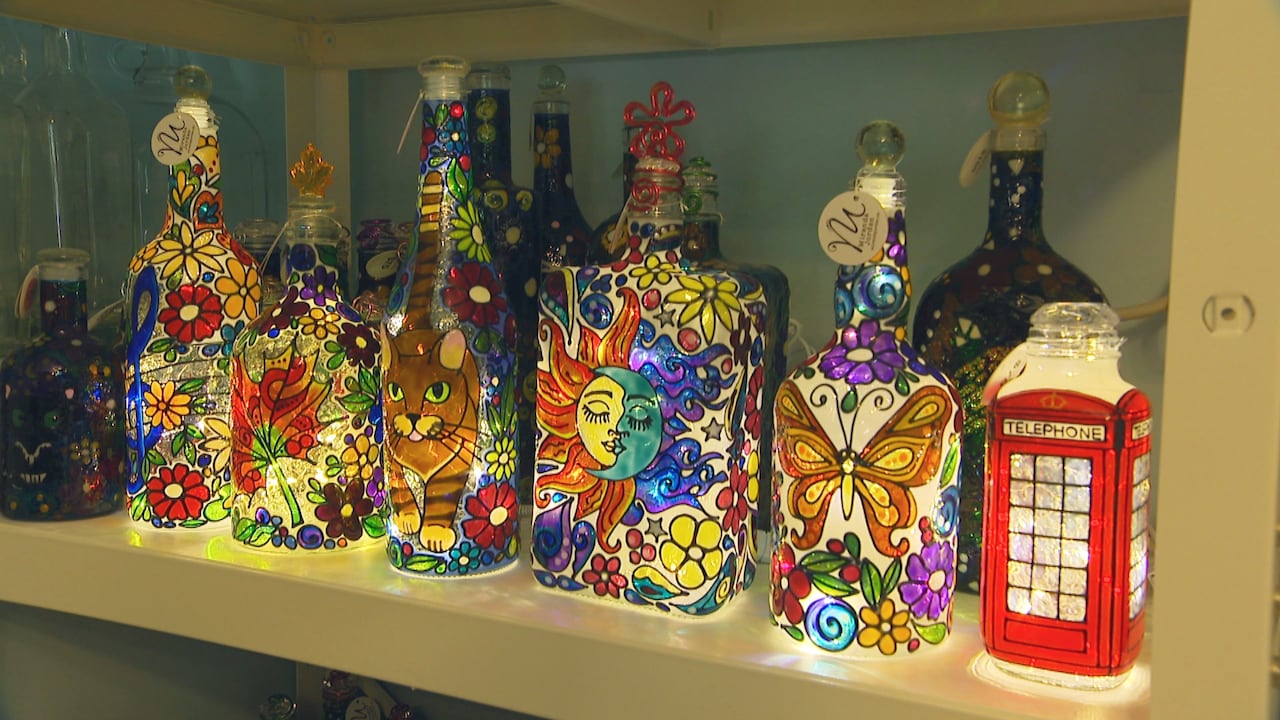
Some of Jordan’s hand-painted lamps, including one adorned with a maple leaf. (David Laughlin/CBC)
CARFAC National, a non-profit organization advocating for professional artists in Canada, stated that artists must not be an afterthought in the nation’s response to the trade conflict.
“Canadian artists are independent workers and entrepreneurs,” declared interim executive director Jenna Faye. “Unlike larger corporations, individual artists lack the financial capacity to absorb additional costs that come with these tariffs.”
Focusing on Canadian Consumers
Although the new tariffs have already disrupted their work, both Hulme and Jordan are adjusting and seizing the chance to focus on Canadian consumers.
“I understand that people wish to support their local creative community,” Hulme noted. “While some may not afford a $300 artwork, they might be able to purchase a $10 card.”
Hulme indicated that she is signing up for more craft fairs to present her creations to local audiences and intends to initiate a series of paintings inspired by pioneering Canadian women.
Jordan expressed hope that people will make a deliberate effort to buy local and connect with Canadian artisans whenever feasible.
“Of course, it doesn’t mean everyone can just spend frivolously on art before managing their mortgage, rent, or groceries. However, I truly believe art adds a vibrant touch to life,” she remarked.